Why Do Cats Purr? It's Not Always Happiness
How a cat makes that rumbling sound, why kittens purr at just a few days old, and why cats sometimes purr when they're hurt or scared. The surprising science behind the purr.
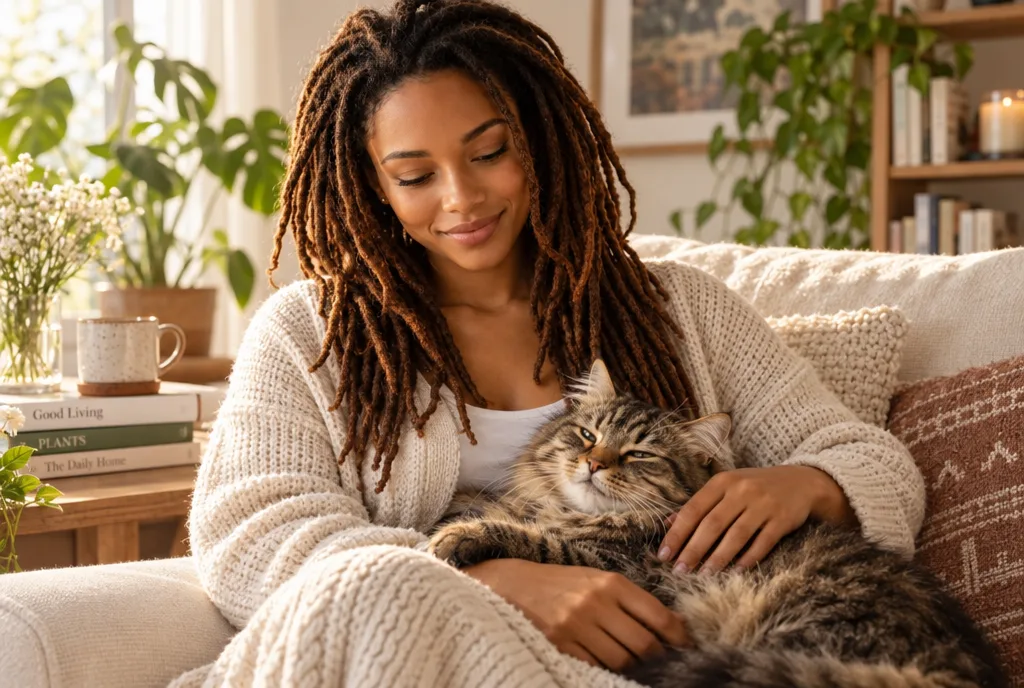
Curl up next to a sleepy cat, and you'll feel it before you hear it: a soft, steady engine running somewhere inside that fur. Purring is one of the most familiar animal sounds in the world, and yet scientists still argue about parts of it.
Here's what we do know.
How a cat makes the sound
A purr starts in the larynx, the voice box in the throat. The muscles there twitch very fast, many times every second. Each twitch opens and closes the gap between the vocal folds, and air rushing through that gap vibrates.
The clever part: cats purr while breathing in and while breathing out. That's why the sound seems to go on and on without a break, and why you can feel it through the whole body.
Purring starts in the first days of life
Kittens are born unable to see or hear. Very early on, often within the first days, they begin to purr while they nurse. The mother cat purrs back.
Scientists think this is one of the purr's first jobs: a quiet signal between mother and kittens that says "I'm here, I'm fine, keep going." It works even when nobody can see anybody.
So it means "I'm happy", right?
Often, yes. A cat stretched out in the sun, kneading a blanket and purring is about as content as an animal gets.
But cats also purr in situations that are anything but relaxing:
- At the vet, on the examination table.
- When they're injured or unwell.
- When a mother cat is giving birth.
That surprises a lot of people. The best explanation is that purring is a way to calm themselves down, a bit like how people hum or rock when they're nervous. So the real meaning of a purr is less "I'm happy" and more "I feel safe" or "I want to feel safe."
The breakfast purr
Have you noticed your cat purrs differently when it wants food? Researchers found that some cats hide a high-pitched cry inside their purr when they're asking for something. People find this "solicitation purr" more urgent and harder to ignore, even when they don't know why. It's a little trick cats seem to learn from living with us.
Can purring heal bones?
You may have heard that purring helps cats heal. Purr vibrations fall in a low frequency range, and some scientists wonder whether that kind of vibration could help bones and tissues repair. It's an interesting idea, but it hasn't been proven, so treat it as a question, not a fact.
Do big cats purr?
Mostly, it's one or the other. Big cats that roar, like lions and tigers, don't purr the continuous way house cats do. Many wild cats that don't roar, like cheetahs, pumas and lynx, purr just like your sofa tiger.
Try it at home
Next time your cat purrs, gently rest two fingers on the side of its throat. Can you feel the vibration? Now watch its chest. Count how many breaths it takes in fifteen seconds and notice that the purr doesn't stop when the cat switches from breathing in to breathing out. If your cat purrs in different situations, at dinner time, on your lap, at the vet, listen closely. Does it sound the same each time?
The short answer
Cats purr by twitching the muscles in their voice box very fast while they breathe in and out. Kittens purr to stay in touch with their mother. Grown cats purr when they're content, but also when they're hurt or stressed, probably to comfort themselves. A purr doesn't always mean "I'm happy". It often means "stay close."
Quick answers
How do cats purr?
Muscles in a cat's voice box twitch very quickly, opening and closing the space between the vocal folds as the cat breathes in and out. The vibrating air makes the steady rumble we hear.
Do cats only purr when they are happy?
No. Cats purr when they are relaxed, but also when they are hungry, stressed, hurt or giving birth. Scientists think purring can be a way for cats to calm themselves and to ask for care.
Can lions and tigers purr?
Most big cats that roar, such as lions and tigers, do not purr the way house cats do. Some wild cats that do not roar, such as cheetahs and pumas, purr much like a pet cat.